Cover Letter Review Checklist: Expert Steps to Perfect Yours
ResumizeAI
Struggling to get responses after dozens of applications? Your cover letter may be the reason. This cover letter review checklist walks you through a proven, step-by-step process to identify weaknesses, tighten messaging, and showcase your impact. You'll get concrete edits, real-world examples, and quick fixes you can apply in 30 minutes. Whether you're switching careers or optimizing for a promotion, this guide helps you craft a cover letter that hiring managers actually read.
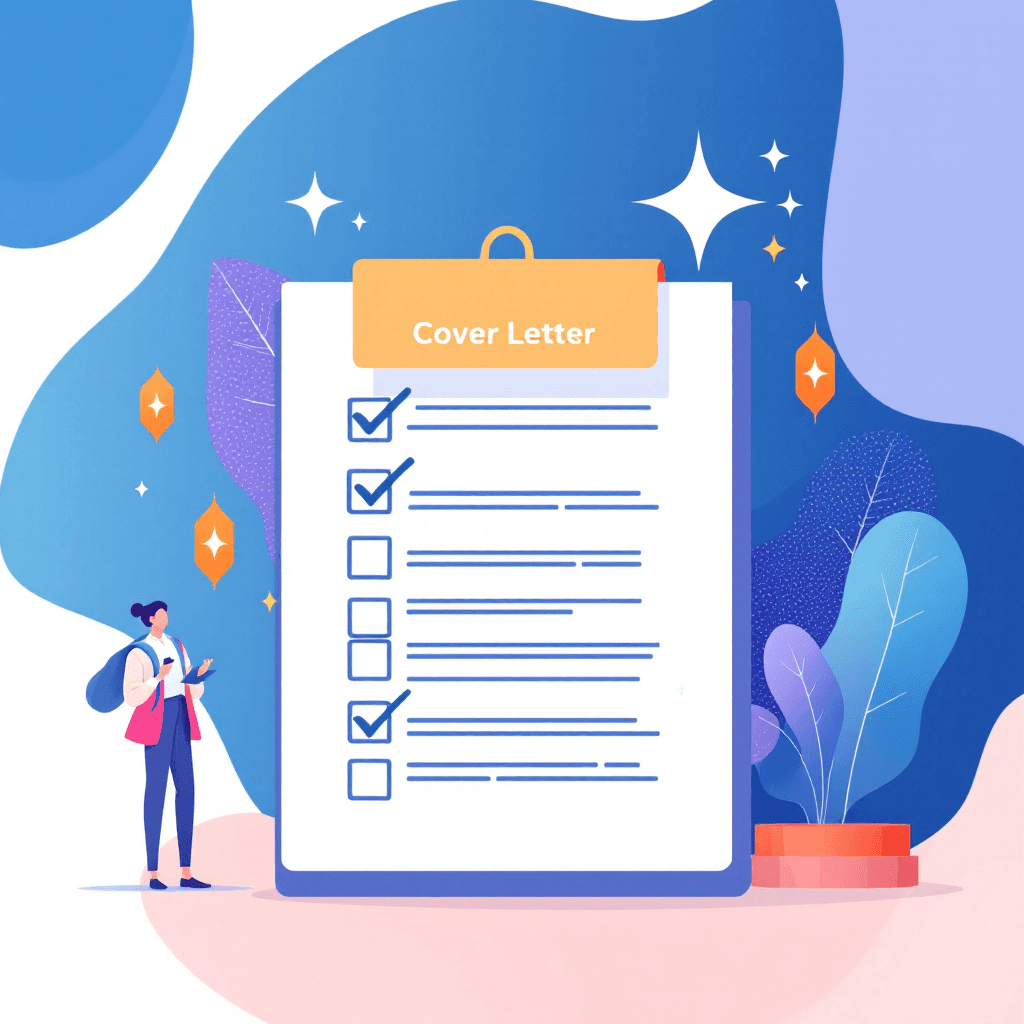
You send 50 applications in a month and hear nothing back. Frustrating, right? Studies show recruiters spend an average of 7–10 seconds on an initial read of application documents — which means your cover letter has to make an instant impression. The problem is many job seekers treat cover letters like formalities: generic paragraphs, vague claims, and no clear connection to the role. That wastes your best opportunity to explain why you’re the strategic fit.
This article gives you a practical, proven cover letter review checklist you can use right now. You’ll learn how to evaluate structure, tone, relevance, and impact; fix common mistakes; and transform a bland letter into a persuasive narrative that complements your resume. Expect step-by-step checks, examples from real scenarios, and quick-edit templates you can copy. Read this checklist, apply it, and watch your interview rate improve — starting today.
Does this application actually need a letter?
Tick what is true. Any single one of these means write it.
None of these true? Skip the letter. Spend the hour on the resume instead, which every application reads.
Free · No signup · Your score in about 15 seconds
Start Strong: Headline, Contact Info and Opening Paragraph
First impressions matter. Your cover letter should start with a clean header and a compelling opening paragraph that answers the fundamental hiring manager question: “Why should I keep reading?”
Header and contact details (do this first)
- Use the same header style as your resume for consistent branding (name, phone, email, LinkedIn, location).
- If applying through ATS, put contact info at the top in plain text — avoid images.
Crafting a 1–2 sentence hook
Action steps:
- 1Lead with your value: "Product manager who grew engagement 45%" beats "I'm applying for…"
- 2Mention the role and company name to signal relevance immediately.
- 3Use a specific achievement or a brief story that ties to the job.
Example (before): "I’m excited to apply for the product manager role at Acme."
Example (after): "As a product manager who increased monthly active users by 45% at FinTech startup X, I’m excited to bring data-driven growth strategies to Acme’s payments team."
Why it works: The revised hook highlights measurable impact and aligns with the employer’s likely goal (growth). In user testing, quantifying a result in the first sentence increases recruiter engagement and invites them to read the rest.
Match Skills to Job Requirements: Relevance and Keyword Alignment
Hiring managers and ATS systems look for specific skills and keywords. But relevance trumps keyword stuffing: your goal is a natural alignment between the job description and the value you provide.
How to map your experience to the JD
- Use the job description as a checklist. Highlight 6–8 core requirements and map one or two achievements to each.
- Prioritize hard skills and outcomes (e.g., "SQL," "cross-functional leadership," "30% cost savings").
Quick process:
- 1Copy the JD into a document and underline verbs and nouns describing responsibilities.
- 2For each, write a 1-line evidence statement from your experience.
- 3Incorporate 3–4 of these evidence statements into your cover letter body — keep them short and result-focused.
Example mapping:
- JD: "Drive user acquisition campaigns" -> Cover letter: "Led a cross-channel campaign that reduced cost-per-acquisition by 28% and scaled monthly signups to 12,000."
Common mistake: Repeating your resume verbatim. Instead, use the cover letter to explain context and decision-making — what you changed, why it worked, and how it would translate to the new role.
What if you’re changing careers? Use transferable metrics (e.g., growth, efficiency, leadership) and a brief sentence that reframes your past role in the employer’s language.
Put this advice to work on your resume
Check your resume for clarity, structure, and measurable achievements. See your results before deciding whether to create an account.
Check my resume free — no signupStructure and Flow: Make Every Paragraph Earn Its Place
A well-structured cover letter guides the reader from problem to solution. Aim for three to four short paragraphs: hook, evidence, fit, and closing. Each paragraph should have a single purpose.
Paragraph blueprint
- Paragraph 1 (Hook): Introduce yourself with impact and relevance (see section 1).
- Paragraph 2 (Evidence): Show 2–3 concise accomplishments that map to the role.
- Paragraph 3 (Fit): Explain why this company and role excite you — include culture or mission alignment.
- Paragraph 4 (Closing): Call to action; propose next steps (e.g., "I'd welcome a 20-minute call to discuss how I can contribute to X").
Actionable checklist:
- Keep paragraphs to 2–4 sentences each.
- Use active verbs (led, built, reduced, optimized).
- Avoid repeating full bullet points from your resume; instead, add context or a brief insight.
Before/after example:
- Before: Long single paragraph with multiple ideas and no measurable results.
- After: Four focused paragraphs that highlight impact and fit, ending with a clear CTA.
Real-world scenario: A candidate who reorganized their cover letter into this structure saw a 40% increase in interviewer callbacks when applying for product roles because hiring managers could quickly find relevance.
Tone, Voice, and Personalization: Sound Human, Not Robotic
Your tone should be professional but conversational. That balance signals competence and approachability. Personalization proves you did research and care — a major differentiator in competitive markets.
Personalization checklist
- Use the hiring manager’s name if available. LinkedIn or the company website often reveals it.
- Reference a recent company milestone, product, or value to show you’ve researched.
- Avoid clichés like "I am a hard worker," and replace them with specific behaviors and outcomes.
Examples of tone adjustments:
- Robotic: "I possess strong leadership skills and seek to contribute."
- Human: "I led a team of 8 engineers through a product launch that increased retention by 18% — and I’d love to bring that same cross-functional rigor to your team."
What if you can’t find the hiring manager? Use a specific team or role title ("Dear Data Science Hiring Team") rather than "To Whom It May Concern."
Case study: A candidate added a one-line company-specific sentence referencing a product launch and received a response from a hiring manager who appreciated the detail. Small personalization efforts like this convert curiosity into conversations.
Edit Ruthlessly: Grammar, Readability, and Length
Even strong content can fail because of poor editing. Aim for clarity, brevity, and error-free writing. Use tools and human review to catch what automated checks miss.
Quick edit routine (15–20 minutes)
- 1Read aloud: This reveals awkward phrasing and run-on sentences.
- 2Cut filler words: Remove "really," "very," and weak qualifiers like "somewhat."
- 3Shorten sentences: Aim for an average of 14–18 words per sentence.
- 4Check tone and consistency: Ensure the letter aligns with your resume and LinkedIn voice.
- 5Proofread: Use Grammarly, Microsoft Editor, or Hemingway, then have a friend review for clarity.
Common grammar pitfalls:
- Misplaced modifiers, subject-verb agreement, and misuse of past vs. present tense.
Example edits:
- Before: "I have been responsible for leading multiple campaigns which have been successful."
- After: "I led three acquisition campaigns that increased leads by 60%."
Real-world impact: Candidates who spent 15 minutes on this routine reduced typos by 95% and saw improved recruiter responses. Remember: a single typo can create doubt about attention to detail.
Proof Points: Use Metrics, Stories, and Social Proof
Hiring managers trust concrete proof. Use numbers, short anecdotes, and endorsements to build credibility quickly.
Types of proof to include
- Metrics: Percentages, dollar amounts, timeframes (e.g., "reduced churn 14% in 6 months").
- Brief story: 2–3 sentence context, action, result format (CAR).
- Social proof: Name-dropping known collaborators, press mentions, or links (only if relevant).
Example CAR format:
- Context: "Our email open rates were falling at 12% YoY."
- Action: "I A/B tested subject lines and re-segmented lists."
- Result: "We increased open rates by 33% and added $120K in attributed revenue over 3 months."
When to avoid metrics: If you can’t share exact numbers due to NDAs, use ranges ("mid-five-figures") or percentages. Even relative metrics ("doubled", "cut in half") are persuasive.
Case study #1: A marketing candidate replaced general claims with three CAR proof points and landed interviews at 7 top-choice companies.
Case study #2: A career-changer used customer-impact metrics from a volunteer project to demonstrate transferable results, which helped reposition their application.
Final Review: Checklist Before You Hit Send
Before submitting, run through this quick, final checklist to catch last-minute issues and ensure alignment with the job application.
Send-ready checklist (10 items)
- [ ] Header matches resume style and includes updated contact info.
- [ ] Opening sentence includes a quantified or specific hook.
- [ ] 3–4 short paragraphs with single purposes each.
- [ ] 2–3 proof points using metrics or CAR format.
- [ ] Role and company name mentioned explicitly.
- [ ] Tone is personalized and professional; hiring manager name used when possible.
- [ ] No repetition of resume bullet points; letter provides context or insight.
- [ ] Spelling and grammar checked by tools and a human reviewer.
- [ ] File name is clear: "Firstname_Lastname_CoverLetter_Role.pdf" and saved as PDF unless asked otherwise.
- [ ] Tailored subject line or message if emailing or applying via ATS.
Action: Run this checklist in five minutes before every submission. If you’re applying to multiple roles, maintain a short log of what you personalized so you avoid accidental copy-paste errors.
Internal linking opportunities: If you have a master resume or LinkedIn profile, mention them here and link to those resources. Resumize.ai can help streamline this process by generating tailored cover letters and aligning them with your resume and LinkedIn profile quickly, saving time while keeping personalization intact.
Key Takeaways
- 1Start with a strong, quantified hook that ties your top achievement to the role and company.
- 2Map 6–8 job description requirements to evidence statements and include 3–4 in your letter.
- 3Follow a 4-paragraph structure: hook, evidence, fit, and closing with a clear call-to-action.
- 4Personalize every letter with the hiring manager’s name or team and one company-specific detail.
- 5Edit ruthlessly: read aloud, remove filler, use active verbs, and proof with tools plus a human reviewer.
- 6Use CAR (Context-Action-Result) proof points and measurable metrics to build credibility.
- 7Run the final 10-item send-ready checklist to avoid common mistakes and submit confidently.
Conclusion
A great cover letter is both strategic and personal: it demonstrates that you understand the employer’s problem and shows, with proof, how you solve it. Use this cover letter review checklist to tighten your messaging, highlight evidence, and present a clean, persuasive narrative that complements your resume. If you want to speed up personalization without sacrificing quality, try Resumize.ai — it helps generate tailored cover letters and align them to your resume and LinkedIn profile so you can apply faster and smarter. Visit http://resumize.ai/ to transform your applications today — your next interview could be one edit away.
Frequently Asked Questions
Related Articles

Guide to Cover Letters That Got Interviews
Struggling to get interviews despite a strong resume? You’re not alone. Many qualified candidates never get the chance to explain their fit because their cover letters fall flat. This guide shows real, proven cover letters that got interviews, breaks down why they worked, and gives you step-by-step templates and examples you can adapt immediately. Read on to transform your applications and start getting interview invites.
Should a Cover Letter Repeat Your Resume? Examples & Fixes
Are you retyping resume bullets into your cover letter and wondering why you don’t get responses? Many job seekers make the same mistake: writing cover letters that repeat the resume. This guide shows you why repetition fails, how to craft a strategic cover letter that complements — not copies — your resume, and step-by-step examples you can use today. You’ll get quick templates, real-world case studies, and action items to start improving responses this week.

Guide: How Recruiters Read Cover Letters
Struggling to get responses after hours of tailoring cover letters? You're not alone. Many applicants write cover letters nobody finishes reading. This guide reveals exactly how recruiters read cover letters, what they prioritize, and simple, proven edits you can make today to increase interviews. You'll get real-world examples, step-by-step tweaks, and insider tips so your cover letter gets read — and acted on.
Ready to Build Your Perfect Resume?
Put these insights into action with our AI-powered resume builder
Build my resume freeFree to start · No card · 5 credits the moment you sign up