Website vs LinkedIn ROI Guide: Proven Strategies
ResumizeAI
Are you investing time and energy into a personal website or pouring it into LinkedIn posts — but uncertain which delivers better ROI? You’re not alone. Many professionals struggle to quantify the value of each channel for job-hunting, networking, and personal branding. This guide walks you through clear metrics, side-by-side comparisons, real examples, and step-by-step actions to calculate and improve return on investment for both. By the end, you'll know which platform to prioritize, how to test smartly, and how to use tools like Resumize.ai to turn profile views into interviews.
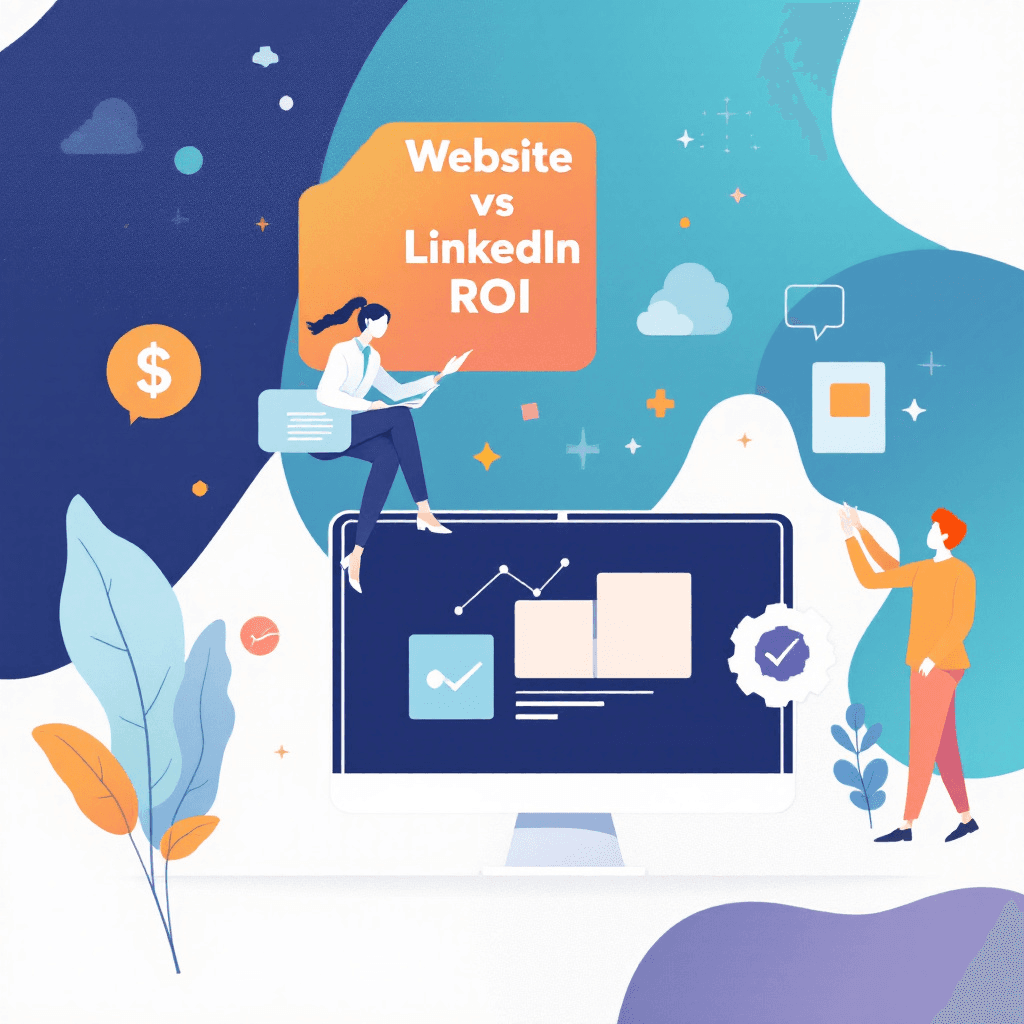
Imagine spending 6 hours crafting a personal website that gets 50 visits a month while your LinkedIn profile nets 400 profile views and a recruiter message in the same week. Which one gave you better ROI? Website vs LinkedIn ROI is a question that trips up many job seekers and career changers. The truth: both platforms deliver value, but in different ways — and measuring that value requires a clear framework. In this article you’ll discover a practical method to calculate ROI for your website and your LinkedIn presence, learn which metrics matter at different career stages, and get proven, tactical steps to boost returns immediately. By the time you finish reading, you’ll be able to run simple A/B tests, optimize content and messaging, and use tools like Resumize.ai to convert attention into interviews. If you’re serious about accelerating your job search or building a long-term personal brand, this is the essential guide to make every hour and dollar count.
Your profile and your resume get read by the same recruiter, minutes apart.
Tick anything that is true of yours right now.
Ticked nothing? Rare. Both still have to use the words a recruiter actually searches for, which is what a score checks.
Free · No signup · Your score in about 15 seconds
Why ROI Matters for Personal Branding: Understanding Website vs LinkedIn
Before you pick a side, you need to define ROI for personal branding. ROI isn’t just money — it's the ratio of career outcomes (interviews, offers, clients, visibility) to the time and financial resources invested. Use this simple formula: (Tangible outcomes value ÷ Investment) × 100 to get a percentage. Tangible outcomes vary: a recruiter call, a freelance client, a speaking invite. Investment includes hours building content, subscription fees, and ad spend.
Common mistakes when comparing channels
- Comparing traffic numbers alone: Views don’t equal outcomes.
- Ignoring attribution: Where did that interview lead come from? Use tracking and clear contact pathways.
- Treating channels as mutually exclusive: Many high-performers use both strategically.
Quick framework to decide which to prioritize
- 1Define 3 target outcomes (e.g., 3 interviews/month, 1 freelance client, increased network by 200).
- 2List current investments (hours/week + costs).
- 3Track baseline performance for 30 days.
Example: A UX designer defines outcomes as two interviews/month. They track traffic: LinkedIn yields 60 profile views and 1 recruiter message; website yields 30 visits and 0 messages. Short-term LinkedIn ROI looks higher — but a focused website update with case studies can raise conversions long-term. This section equips you to stop guessing and start measuring.
Measuring LinkedIn ROI: Metrics, Tactics, and Quick Wins
LinkedIn is built for discovery and direct outreach. Its ROI tends to be front-loaded: fast connection, quick recruiter messages, easy sharing. To measure LinkedIn ROI, track these metrics weekly and monthly:
- Profile views and search appearances
- Connection growth rate and quality (relevant recruiters, hiring managers)
- Messages, InMails, and recruiter outreach
- Engagement on posts (comments, shares) and referral traffic to your website or resume
- Conversions: interview invites, informational calls, or contract offers
Step-by-step to improve LinkedIn ROI this week
- 1Optimize headline and About section: include your role, specialty, and a clear call-to-action (CTA). Example: “Product Designer — Mobile UX for Fintech — Open to remote roles | Portfolio & case studies below.”
- 2Publish 1 value-focused post and 2 comments per week targeting your niche. Use a 3-part toolkit: a quick lesson, a visual case snippet, and a CTA to DM or click your portfolio link.
- 3Use LinkedIn Search and Saved Searches to proactively connect with 20 relevant recruiters/hiring managers weekly.
- 4Convert profile visitors: pin a Featured case study or portfolio link and include a Calendly link for quick calls.
Case study: Maria, a marketing manager, boosted recruiter messages by 120% within a month by changing her headline to focus on measurable outcomes (“GTM Lead — grew ARR by 30%”) and posting 2 posts/week that summarize campaign results. Her cost: 4–6 hours/week.
The headline is one line. The resume is the proof.
Upload the resume and the discoverability score runs the same keyword match a recruiter search does. No account.
Upload it and see what a recruiter sees
- Scores the four things recruiters filter on
- Names the exact lines that break
- No account, about 15 seconds
Measuring Website ROI: Long-Term Value, SEO, and Conversion Strategies
A personal website functions like a long-term asset: it can capture branded search, host detailed case studies, and act as a conversion hub. Website ROI is often realized over months, not days. Key metrics to measure:
- Organic traffic and keyword rankings (SEO)
- Bounce rate and time on page for portfolio/case study pages
- Contact form submissions, email signups, and demo/bookings
- Source attribution: how many leads came from social, search, or direct referrals
- Conversion rate: visits → contact or application
Optimize your website for ROI with these actions
- 1Build 3 high-impact case studies (one per week): Each should include challenge, process, results, and quantifiable outcome. Use visuals and measurable KPIs.
- 2Add clear CTAs on every page: “Schedule a 15-min call” or “Download resume”. Track clicks with UTM tags.
- 3Implement GA4 and a simple CRM or spreadsheet to capture leads and source.
- 4Invest 1–2 hours/week in SEO: target long-tail queries like “product designer portfolio fintech case study” and publish content that answers those queries.
Example: Ben, a software engineer, published three targeted case studies and optimized them for niche keywords. Over six months organic inquiries grew to three inquires/month, one of which turned into a freelance contract worth $6,000. His site cost was $120/year — a clear ROI.
Side-by-Side Comparison: When Website Wins and When LinkedIn Wins
Both channels have strengths. Here’s a direct comparison to help you choose based on goals, timeline, and resources.
When LinkedIn is the better short-term bet
- You need interviews quickly (within 1–8 weeks).
- Your role is highly network-driven (sales, recruiting, marketing).
- You rely on social proof and frequent interactions.
When a Website is the better long-term investment
- You need to showcase long-form work (engineering, design, writing).
- You want search-driven passive leads (speaking, consulting, freelance clients).
- You're building a portfolio that needs consistent branding and deep case studies.
Hybrid approach — best of both worlds
- Use LinkedIn for discovery and rapid outreach; use your website as the conversion hub. For example:
- 1Share a bite-sized case study on LinkedIn with a CTA: “Read the full case study on my site.”
- 2Use LinkedIn posts to drive targeted traffic to site pages optimized for conversion.
- 3Add UTM parameters to measure which posts lead to real outcomes.
Concrete scenario: Olivia, transitioning to product management, used LinkedIn to connect with PM recruiters and routed them to a case-study-rich website. Within three months she had 5 informational interviews and 2 onsite interviews; the website provided the depth to convert interest into interview invitations.
How to Run an A/B Test to Compare Website vs LinkedIn ROI
Testing beats guessing. Here’s a practical A/B test you can run over 8 weeks to determine which channel gives you better ROI for a specific outcome (e.g., interview invites):
Setup (Week 0)
- Define the outcome: e.g., 3 recruiter conversations or 1 technical interview.
- Ensure tracking tools are in place: GA4 for your site, LinkedIn analytics, and a shared spreadsheet for outcomes.
- Prepare two pieces of content: a short LinkedIn post with a CTA and a landing page on your website with the same CTA.
Execution (Weeks 1–6)
- 1Week 1–3: Promote the LinkedIn post twice/week. Measure profile views, messages, and direct conversions.
- 2Week 4–6: Run the website-focused campaign: share the landing page link in niche Slack groups, relevant forums, and one paid ad (optional).
- 3Track outcomes: interviews scheduled, recruiter replies, consult requests.
Analysis (Week 7–8)
- Compute ROI for each: Value of outcomes (estimated $ or opportunity score) ÷ hours + costs invested.
- Ask qualitative questions: Which interactions led to higher-quality conversations? Which channel produced repeatable outcomes?
Example: A data scientist ran this test and found LinkedIn produced faster recruiter contacts but lower-quality conversations. The website delivered fewer leads but higher-quality interviews, so they reallocated time to strengthen website case studies and used targeted LinkedIn outreach to promote those pages.
Tactical Playbook: 10 Actions to Maximize ROI from Both Platforms
Use this tactical checklist to increase your returns starting this week. Each action is measurable and actionable.
Quick wins (do these in 1–2 hours)
- Update LinkedIn headline to include metrics and a CTA.
- Add a Featured section with one case study and a link to your site.
- Publish one LinkedIn post showcasing a measurable outcome.
- Add UTM parameters to the portfolio link in your LinkedIn About.
High-impact tasks (spend 4–8 hours/week)
- 1Create three SEO-optimized case studies (1 per week). Focus on keywords hiring managers use.
- 2Set up GA4 goals and weekly tracking for contact conversions.
- 3Establish an outreach routine: 20 targeted messages/week on LinkedIn.
- 4Use Resumize.ai to generate tailored resume bullets and optimized summaries for your LinkedIn About and website bio. Resumize.ai can help you quickly test messaging variations and ensure consistency across platforms.
Ongoing growth (monthly)
- Run a content calendar: 2 LinkedIn posts/week and 1 site update/month.
- Analyze which posts drove conversions and double down.
Case example: Jared, a cloud engineer, followed this playbook and combined LinkedIn outreach with a Resumize.ai-enhanced resume and website bio. Within two months he increased relevant recruiter responses by 80% and doubled the quality of interview conversations.
Key Takeaways
- 1Define ROI for your career outcomes: quantify interviews, offers, or client value before measuring channels.
- 2Use LinkedIn for quick discovery and outreach: optimize headline, post consistently, and track recruiter messages weekly.
- 3Treat your website as a long-term conversion asset: publish SEO-optimized case studies and track contact conversions with GA4.
- 4Run a simple 8-week A/B test to compare channels: measure outcomes, investment hours, and conversion quality.
- 5Adopt a hybrid approach: use LinkedIn to drive traffic and your website as the authoritative conversion hub.
- 6Implement the tactical playbook: update LinkedIn, create three case studies, track with UTM/GA4, and use Resumize.ai to refine messaging.
- 7Measure both quantity and quality: recruiter messages are good; high-quality interview invites are better.
Conclusion
Website vs LinkedIn ROI isn’t an either/or decision — it’s strategic. LinkedIn wins for fast discovery and immediate outreach; your website wins as a durable asset that converts search and showcases depth. The practical path is hybrid: use LinkedIn to attract attention and your website to convert it. Start with clear outcome-based ROI definitions, run a focused A/B test, and use the tactical steps above to iterate. If you want to accelerate results, use Resumize.ai to generate targeted resume bullets, optimized summaries, and consistent messaging across LinkedIn and your website. Visit http://resumize.ai/ to create polished, testable content that turns visitors into interviews — and start improving your ROI today.
Frequently Asked Questions
Related Articles

The Essential, Proven Guide to Resume Branding Mistakes
Are you sending resumes and not getting calls? You're not alone. Many job seekers sabotage their chances with subtle resume branding mistakes that hiring managers notice instantly. This guide reveals the most common errors—from vague headlines to inconsistent online presence—and gives you proven, step-by-step fixes. By the end you'll know exactly what to change, how to test it, and how to use tools like Resumize.ai to polish your brand and win interviews faster.

Future of Personal Branding: Proven Strategies for 2026
What will personal branding look like in the next five years? If you're worried your profile won't keep up with fast-changing hiring trends, you're not alone. This guide unpacks the future of personal branding with proven, actionable steps you can implement now: from AI-powered reputation management to micro-credential storytelling. You’ll get real examples, checklists, and tools (including how Resumize.ai can fast-track your resume and online presence) so you can proactively shape your professional identity and stay competitive.
Guide: LinkedIn vs Resume Keywords (Proven Tips)
Struggling to get interviews despite a strong background? The problem may be how you use keywords—differently—on LinkedIn and your resume. This guide clarifies the critical differences, gives step-by-step keyword tactics, and shows real examples that turn views into interviews. You'll learn how to pick role-specific keywords, tailor them for ATS and recruiter search behavior, and optimize both profiles and PDFs so hiring systems and humans respond. Read on for actionable templates and a fast checklist to implement today.
Ready to Build Your Perfect Resume?
Put these insights into action with our AI-powered resume builder
Build my resume freeFree to start · No card · 5 credits the moment you sign up